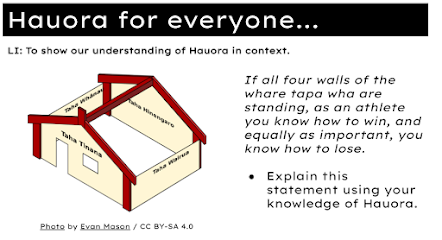
Athletes at their best train mentally and physically because both the mody and the mind need to be strong and have a good balance to be an athlete. If you win or lose it is good to be calm and be thankful that you get to represent your country and that you’ve made it to the olympics. You will be more successful if you believe in yourself and knowing you have support from fans and your whanau to direct you in the path of fame and success .
Showing posts with label Inquiry. Show all posts
Showing posts with label Inquiry. Show all posts
Monday, 9 August 2021

Tuesday, 22 June 2021
Sumarising
For reading, we have been focusing on summarising text information such as stories, articles and other texts. The text we used for this reading task was the traditional Maori story of how the world came to be. This text was about Papatuanuku and Ranginui waking up from eternal darkness in earth's first light, and Tane Mahuta (one of their children) separating them to grant his siblings and himself freedom from the darkness. Tawhirimatea was angry at the separation of his parents.
For this task, we found exactly twenty keywords to build an understanding of the text about. Keywords help us understand more in a short amount of time. Then from those twenty words, we chose six of those words to create a summary on. A summary is a short and brief description of the story so that we can understand the text in fewer words.
I enjoyed this task and found it easy because I am familiar with summarising and understanding texts using the key reading comprehension strategies so I can expand my knowledge of a story.
Thursday, 13 May 2021
Screw | Inquiry
LI. To use smart searching skills
For inquiry we are learning about simple machines.The simple machine we were researching about was a screw. First we had to gather information about a screw. Then we made a dlo about the parts that the screw is made out of and show the parts of the simple machine. The then wrote a 25 word summary about the screw.
Inquiry | Pulley System
LI.To use smart searching skills.
This week for inquiry we learnt about a Pulley. A pulley is a type of simple machine that uses a wheel with a groove in it and a rope. First we watched a video to get information about a pulley. We then made a dlo on how a pulley works and how each part of a pulley.
Monday, 14 December 2020
Sales Pitch Presentation | Inquiry
This week for inquiry my group and I presented our emergency shelter speech.
First we started to prepare ourselves and ready to present our speech and while we were getting ready we pratised our lines and fixed the mistakes.
Then we presented our speech and presentation slide and watched other people do their own. We explained reasons why we chose our own emergency shelter shape and why the materials that were included were good for the natural disaster that we also chose. While me and my group were presenting we held our models.
Last we had a discussion about who was going to be hired and some groups that was going to be fired.
I think that my gorup work on is to work on eye contact and being more confident when saying there lines. My gorup didn't reach the criteria becuase we didn't include our materials test sheet.
Thursday, 26 November 2020
Resource Requisition | Inquiry
All natural disasters start from bad weather. The materials that are suitable against a volcano eruption are: steel door, chicken wire, aluminum sheets, and concrete walls.
The steel door was to get in and out of the shelter when a natural disaster starts or finishes. This material has been chosen because steel is strong.
The concrete walls are out for the base of the shelter and the roof. This material has been chosen to protect against lava because it provides a strong foundation for an emergency shelter.
The aluminum was used for the inside layer to stop lava from coming in. This material was chosen because aluminum is strong.
The chicken wire was used to hold the shelter together and extra protection against lava.
This material has been chosen to protect against volcanic eruptions because it can give the structure more protection and strength against lava.
Lots of materials can help protect against different types of natural disasters.
Friday, 23 October 2020
Insulation | Inquiry
Insulation is a material that protects heat from escpaing. 5 insulation materials that LS1 tested were : Paper, glass, plastic, polystyrene and tin.
Good insulation is when the material protects the heat from escaping. Bad insulation is when the material is unsecure and the heat escapes.
The best insulator for keeping something hot is paper. The worst insulator for keeping something hot is glass.
The best insulator for keeping something cold is polystyrene. The worst insulator for keeping something cold is tin.
The best insulator for keeping things hot and cold is polystryene.
LI: to determine the insulative properties of materials.
Thursday, 15 October 2020
Experiment | Inquiry
For inquiry we were doing experiments.
We did this experiment to see how much water sand, nappies, stones, paper towels, and cotton would absorb. We also did this expermeint to understand what a precisce experement is. The experiment my group was doing was seeing how much water nappies could absorb.
First we had to gather our materials to start the experement.The materials we gathered was a tote tray, nappies and water. Next we measured 100mls of water into a beaker.
Then we poured 100mls of water over a nappie to see how water the nappie would absorb. Once we poured the water over the nappie we lifted the nappie up to see if it absorbed all of the water.
The results were the nappie absorbed all of the water.
I enjoyed doing this task and would like to do it again using a diffrent material.
LI: to learn and practise experimental methods.

Friday, 25 September 2020
Saftey Plans | Inquiry
LI: to demonstrate prior knowledge
For inquiry we checked out the hazards, risk, and consequences that could happen during making a fire and smores.
First, we discussed different hazards and risk. Next we wrote it down. A hazard for the fire is the fire itself and the consequences is getting burnt.
Then, we discussed some consequences that could happen. Consequences can be how can we prevent it, who's responsibillity is it, and the emergency plan.
After, we made another saftey plan for making the smores with the fire. We repeated the same process but wrote down different hazards, risk and consequences. Then we made smores.
Mr Ogilvie lit up the fire and then demostrated how to roast the marshmellows. After he demostrated we made our own smores.
I found this activty hard because it was hard to cook the marsmallows.
Friday, 18 September 2020
Risk Assesment form | Inquiry
LI: to assess risk within a simple activity.
For inquiry we did a gruop task about risk assesment.
We did a recap about what a hazard and a risk is. A hazards is things that can cause harm to people, properties, and the enviroument. A risk is something that will cause harm to people, properties, and the enviroment.
Next we made a saftey plan for a simple activity. We wrote down what activity it is, the class level, number of students, and where the location is.
Then we had to answer questions like what could go wrong, what could cause it to go wrong, how could we prevent it, and whose resposibilty is it.
Lastly we thought of emergency plan which is going to be needed if a risk elevates to a more serious situation.
For inquiry we did a gruop task about risk assesment.
We did a recap about what a hazard and a risk is. A hazards is things that can cause harm to people, properties, and the enviroument. A risk is something that will cause harm to people, properties, and the enviroment.
Next we made a saftey plan for a simple activity. We wrote down what activity it is, the class level, number of students, and where the location is.
Then we had to answer questions like what could go wrong, what could cause it to go wrong, how could we prevent it, and whose resposibilty is it.
Lastly we thought of emergency plan which is going to be needed if a risk elevates to a more serious situation.
Thursday, 10 September 2020
Hazards & Risks | Inquiry
LI: to assess the likelihood
For inquiry we learnt how to assess risks.
First we rated situations on risk levels like, low, likely, possible, elevated and extreme. For example, the situation “ using a lighter to check if the lawnmower has petrol” is extreme risk level.
Lastly we wrote down three situations for each risk level and what might be the consequences.
I learnt how to use common sense in risky situations and how to practise safety to avoid danger.
Friday, 4 September 2020
Hazards & Risks | Inquiry
LI. To demonstrate prior knoledge about risks and hazards


For inquiry we were learning about hazards and risks.
First we played octopus and four corners. Once we played the two games we identified the dangers and accidents that could of happened.
Next we identified the difference between risks and hazards. Hazards mean something that can harm people. Risks are the chances that people take that could harm people or other things.
Then we thought of hazards that could happen in homes,the community,in sports and at school.
Lastly we wrote down risks that could happen in those places.
Friday, 7 August 2020
Cook Island Week | Pronouncing Numbers
I was given a bunch of tasks to complete for Cook Island language week.
One of the tasks I completed was pronouncing numbers from one to 10 in Cook Island language.
First I practised saying the numbers to make the video.
Then I wrote the numbers in Cook Island language.
Afterwards I made a video showing how to pronounce the numbers in Cook Island language.
LI. To learn about the Cook Island language
One of the tasks I completed was pronouncing numbers from one to 10 in Cook Island language.
First I practised saying the numbers to make the video.
Then I wrote the numbers in Cook Island language.
Afterwards I made a video showing how to pronounce the numbers in Cook Island language.
LI. To learn about the Cook Island language
Thursday, 11 June 2020
Inquiry | Light & Sound
In our inquiry session we were learning the volcabulary about light and sound.
We had to find the defenition that we thought matches the word, e.g. Prism is when a transparent shape that can be split into white light to make a spectrum of colours.
The second activity was find, act, draw and animate. We had to chose four diffrent words that were related from the vocabulary activity to explain how it works using an animation, a video, a picture and a drawing.
One word I choose was laser. I drew a picture to show what a laser is.
Thursday, 4 June 2020
Properties of Light | Inquiry
Light is a element that makes objects visible. Light has many propertys.
One property of light is that it can not travel through opaque objects. This was proven by putting an opaque object in front of the torch. The results were that a torch can not travel through opaque objects.
A second property is that white light can be spilt into many colours. This was proven by light traveling through a prisim that spilt the white light into many colours.
A third property is that light travels in a straight line. This was proven by putting a peice of card with a small rectangle hole and measuring the directions of the light. The results was light can travel in straight lines.
One property of light is that it can not travel through opaque objects. This was proven by putting an opaque object in front of the torch. The results were that a torch can not travel through opaque objects.
A second property is that white light can be spilt into many colours. This was proven by light traveling through a prisim that spilt the white light into many colours.
A third property is that light travels in a straight line. This was proven by putting a peice of card with a small rectangle hole and measuring the directions of the light. The results was light can travel in straight lines.
Friday, 29 May 2020
Inquiry | Properties of sound
LI.To observe the Properties of sound
Sound is created by objects and vibration. Sound has three propertys.
One property of sound is sound can travel in all directions. This is proven by standing one meter away from the source of sound, making a noise, and recording the level of the sound.
The second property is sound can travel around coners. This is proven by clapping from around a corner with the sound recorder on the other side.
The third property is sound disapates when it travels. This is proven by dropping a ball near a meter recording the sound and another meter on the far side of the room. The meter on the other side of the room should record a quiter sound.
Sound is created by objects and vibration. Sound has three propertys.
One property of sound is sound can travel in all directions. This is proven by standing one meter away from the source of sound, making a noise, and recording the level of the sound.
The second property is sound can travel around coners. This is proven by clapping from around a corner with the sound recorder on the other side.
The third property is sound disapates when it travels. This is proven by dropping a ball near a meter recording the sound and another meter on the far side of the room. The meter on the other side of the room should record a quiter sound.
Tuesday, 11 February 2020
About me 2020
Kia Ora
My name is Kruse. I am Samoan, Maori and German. My favouite colour is green.
I am in LS1 at Panmure Bridge School. I enjoy Maths my favourite thing in Maths is times tables.
In my speare time I play Need For Speed Carbon and Rugby league live 3.
At home I also watch rugby league. My favourite teams are the Warriors and the North Queensland Cowboys.

I am in LS1 at Panmure Bridge School. I enjoy Maths my favourite thing in Maths is times tables.
In my speare time I play Need For Speed Carbon and Rugby league live 3.
At home I also watch rugby league. My favourite teams are the Warriors and the North Queensland Cowboys.

Subscribe to:
Posts (Atom)